What is the differences between 4-axis and 5-axis CNC machining
In the world of CNC machining, understanding the differences between 3-axis, 4-axis, and 5-axis machining is crucial for optimizing production processes. While 3-axis machining remains widely used, 4-axis and 5-axis CNC machining have gained popularity for their ability to handle more complex geometries and improve precision. This article delves into the principles, differences, and applications of 4-axis and 5-axis CNC machining, helping you make informed decisions for your manufacturing projects.
1. What is 3-Axis CNC Machining?
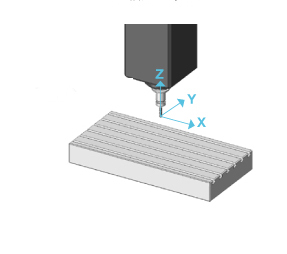
3-axis CNC machining is the most basic form of CNC machining, operating along three linear axes: X, Y, and Z. It is ideal for producing simple parts with flat or slightly contoured surfaces.
Limitations of 3-Axis Machining:
Limited ability to machine complex geometries.
Requires multiple setups for intricate parts, reducing efficiency.
Inability to access hard-to-reach areas or deep cavities.
2. What is 4-Axis CNC Machining?
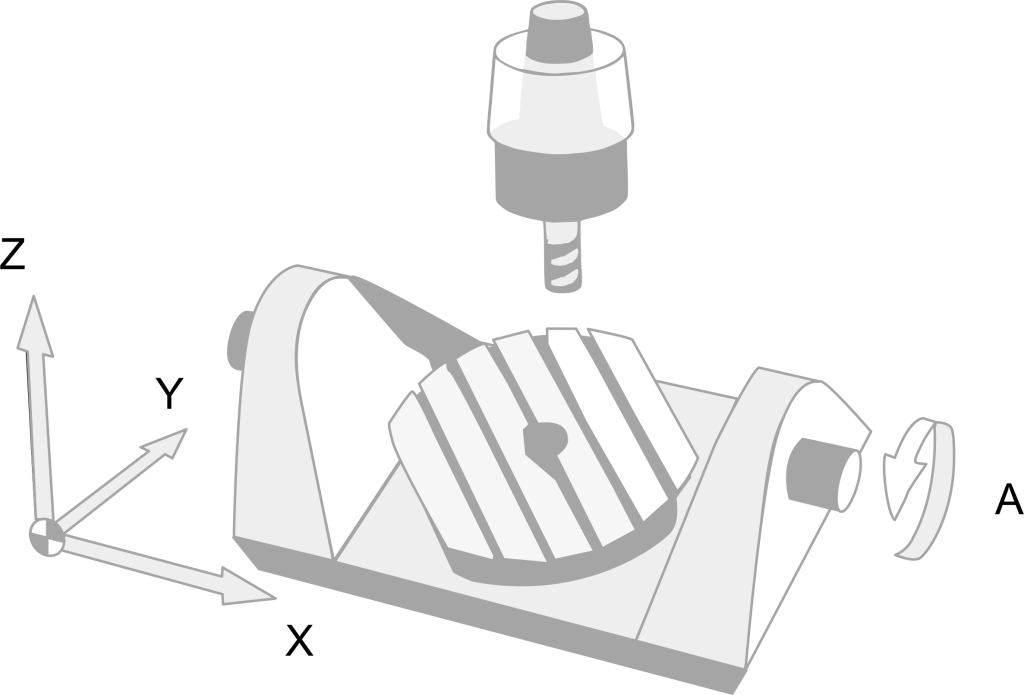
4-axis CNC machining introduces an additional rotational axis (typically the A-axis), allowing the workpiece to rotate during machining. This added axis enhances the machine's capability to produce more complex parts.
Advantages of 4-Axis Machining:
Reduced setup time by enabling multi-sided machining in a single operation.
Improved precision for parts requiring rotational symmetry, such as cylindrical components.
Ideal for tasks like drilling holes on the sides of a workpiece or creating intricate patterns.
3. What is 5-Axis CNC Machining?
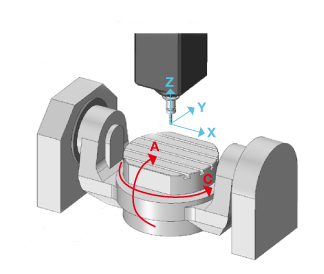
5-axis CNC machining takes complexity and precision to the next level by adding two rotational axes (A, B, or C). This allows the cutting tool to approach the workpiece from virtually any direction, making it perfect for highly complex parts.
Advantages of 5-Axis Machining:
Ability to machine complex 3D shapes and contoured surfaces in a single setup.
Superior surface finish and accuracy.
Reduced tool wear and increased efficiency for high-precision industries like aerospace and medical manufacturing.
4. 3+2 Axis vs. Continuous 5-Axis Machining
3+2 Axis Machining:
Also known as positional 5-axis machining, it locks the tool at a fixed angle while the workpiece rotates.
Faster and simpler than continuous 5-axis machining but less versatile.
Suitable for parts that require machining at specific angles without continuous tool movement.
B. Continuous 5-Axis Machining:
The cutting tool moves dynamically along all five axes simultaneously.
Delivers exceptional surface finishes and access to complex geometries.
Ideal for high-precision applications but requires advanced programming and expertise.
5. Key Differences Between 4-Axis and 5-Axis CNC Machining
Number of Axes:
4-axis: 3 linear axes (X, Y, Z) + 1 rotational axis (A-axis).
5-axis: 3 linear axes + 2 rotational axes (A, B, or C).
B. Flexibility and Complexity:
5-axis machining offers greater flexibility, enabling the production of highly complex parts with fewer setups.
4-axis machining is more limited but still superior to 3-axis for moderately complex tasks.
C. Cost and Operation:
5-axis machines are more expensive due to their advanced capabilities.
Operating 5-axis machines requires higher skill levels and more sophisticated software.
6. Applications of 4-Axis and 5-Axis CNC Machining
4-Axis Machining Applications:
Cylindrical parts like camshafts and rotors.
Engraving and patterning on curved surfaces.
Multi-sided machining for components like gears and brackets.
B. 5-Axis Machining Applications:
Aerospace components such as turbine blades and impellers.
Medical devices with intricate geometries.
Complex molds and dies for automotive and consumer products.
7. How to Choose Between 4-Axis and 5-Axis CNC Machining
Budget Considerations:
5-axis machines are significantly more expensive, making them suitable for high-budget projects.
4-axis machines offer a cost-effective solution for moderately complex parts.
B. Project Requirements:
For highly complex parts with intricate geometries, 5-axis machining is the best choice.
For simpler parts or those requiring rotational symmetry, 4-axis machining is sufficient.
C. Operational Complexity:
5-axis machining requires advanced programming and operator expertise.
4-axis machining is easier to operate and more accessible for smaller manufacturers.
8. Benefits of Using 4-Axis and 5-Axis CNC Machining
-4-Axis Machining Benefits:
Faster production times for moderately complex parts.
Improved accuracy and reduced setup requirements.
Cost-effective for small to medium-scale manufacturing.
-5-Axis Machining Benefits:
Exceptional precision and surface finish.
Ability to produce highly complex parts in a single setup.
Reduced tool wear and increased efficiency for high-precision industries.
9. Conclusion
4-axis and 5-axis CNC machining have revolutionized the manufacturing industry by enabling the production of highly complex and precise parts. While 4-axis machining is ideal for moderately complex tasks, 5-axis machining excels in high-precision applications. By understanding their principles, differences, and applications, you can choose the right CNC machining method to optimize your production processes and achieve superior results.
Recommend
-

-

QQ Zone
-

Sina Weibo
-

Renren.com
-

Douban

recommended for you
-
Why Custom Cooling Needs Often Lead to CNC Machining
-
CNC Machining Services for Magnesium, Aluminum & Titanium Parts
-
Essential Machining Tools: A Comprehensive Guide to Types and Applications
-
Humanoid Robots: Exploring New Opportunities in the CNC Machining Industry
-
Stainless Steel: A Guide to Types, Properties, and Industrial Applications